
Manganese Ore for Ferroalloys: What Ferromanganese and Silicomanganese Smelters Need
Steel mills buy manganese as ferromanganese and silicomanganese, and smelters make both from ore. This guide explains each alloy, how ore becomes alloy, which limits smelters set for Mn content, Mn/Fe ratio, phosphorus and lump size, and how to write them into an offer.
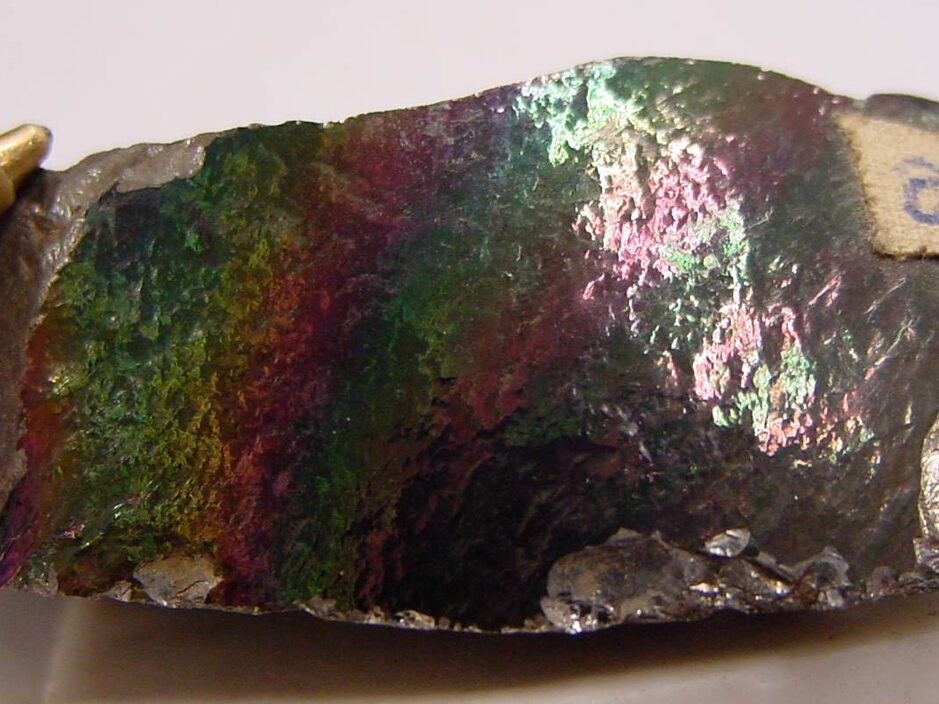
The manganese alloys steel mills buy
Mills add manganese to steel as an alloy, not as ore. The photo above shows spiegeleisen, an early manganese-iron alloy. Modern mills buy the grades below.
| Alloy | Typical limits | Role |
|---|---|---|
| High carbon FeMn | Up to 7.5% C. A common grade holds 78% Mn | Main manganese source for carbon steels |
| Medium carbon FeMn | 1 to 1.5% C, 75 to 85% Mn | Steels that need less carbon pickup |
| Low carbon FeMn | Up to 0.75% C | Low carbon and stainless grades |
| Silicomanganese (SiMn) | 60 to 72% Mn, 14 to 20% Si, carbon up to 1.8 to 2.5% in common grades | Steels that need manganese and silicon together. Also a feed for low carbon FeMn |
Limits differ by standard and customer. Check the grade table your mill uses.
How ore becomes alloy
Smelters heat manganese oxides with carbon at very high temperature. Carbon strips the oxygen from the oxide. Submerged arc furnaces replaced blast furnaces in most plants because they use less coke, give longer refractory life and need no hot blast.
Ore limits smelters set
Ore is the main cost and the main quality risk. These reference ranges come from published ferroalloy sources. Confirm exact limits with each smelter, because furnace practice differs.
| Parameter | Reference range | Why it matters |
|---|---|---|
| Mn content | 38 to 55% Mn for high carbon FeMn. Blast furnaces use ore down to 28% Mn. Grade bands: high 44 to 48%, medium 35 to 44%, low 25 to 35% | Sets ore tonnes per tonne of alloy and slag volume |
| Mn/Fe ratio | At least 7.5 for 78% Mn high carbon FeMn. Producers blend ores to reach it | Iron in the ore dilutes the alloy |
| Phosphorus | Most feed phosphorus enters the alloy. Blast furnace FeMn often carries 0.4 to 0.6% P | Steel mills cap phosphorus. Low carbon FeMn needs ores free of iron and phosphorus |
| Lump size | Generally 10 to 80 mm, with no more than 10% under 10 mm | Too many fines hurt furnace operation |
| Moisture | Up to 10% including chemically bound water is cited | Agree prices and assays on a dry basis |
| Slag chemistry | CaO/SiO2 above 1.4 in silico-thermic slag. High Mn slag holds 28 to 40% Mn | Ore gangue sets flux demand |
Slag does not take phosphorus out of the alloy. A cheap ore with high phosphorus costs more in rejected alloy than it saves in price.
Where smelters source ore
| Country | 2025 mine output, thousand tonnes Mn content | Share of world |
|---|---|---|
| South Africa | 7,600 | 38% |
| Gabon | 5,000 | 25% |
| Ghana | 2,000 | 10% |
| Australia | 1,600 | 8% |
| Brazil | 800 | 4% |
| India | 790 | 4% |
| China | 700 | 3.5% |
| World total | 20,000 | 100% |
Source: USGS Mineral Commodity Summaries 2026. Figures show manganese content, not ore tonnes.
The 2025 average price for 44% Mn ore was US$4.50 per metric ton unit CIF China, down from US$5.53 in 2024 (USGS, CRU Group). For current offers, read our manganese ore price update. For grades and pricing method, see the manganese ore grades guide. For contracts, Incoterms and inspection, read how to import manganese ore.
What to put in your offer request
- The alloy you make and its target grade.
- Minimum Mn on a dry basis.
- Minimum Mn/Fe ratio.
- Maximum phosphorus.
- Ranges for SiO2, Al2O3, CaO and MgO.
- Lump size range and the maximum share of fines.
- Maximum moisture and the weighing basis.
- Tonnage, loading port and discharge port.
- Sampling method and umpire laboratory.
Need manganese ore for a smelter?
Send your alloy, Mn, Mn/Fe and phosphorus limits, size range, tonnage and discharge port. Pure Talcum reviews each request and confirms the available grades and assay reports before you order.
Red flags in a manganese ore offer
Frequently asked questions
What ore is used to make ferromanganese?
Metallurgical ore with 38 to 55 percent Mn feeds high carbon ferromanganese. Blast furnaces use ore down to 28 percent Mn.
How much ore does a tonne of manganese alloy need?
About 2 tonnes of ore per tonne of alloy, according to Eramet. Low carbon ferromanganese made by the silico-thermic route uses 1,250 to 1,350 kg of calcined ore per tonne.
What Mn/Fe ratio does ore need?
For 78 percent Mn high carbon ferromanganese, one reference states a minimum ore Mn/Fe ratio of 7.5. Producers blend ores to reach it.
Why does phosphorus matter in manganese ore?
Most phosphorus in the furnace feed ends up in the alloy. Blast furnace ferromanganese often holds 0.4 to 0.6 percent P, and no practical industrial process removes it. Buyers cap phosphorus in the ore.
What ore size do smelters want?
Generally 10 to 80 mm with no more than 10 percent under 10 mm, according to one ferroalloy producer.
What is the difference between ferromanganese and silicomanganese?
Ferromanganese is a manganese-iron alloy graded by carbon. Silicomanganese adds about 14 to 20 percent silicon for steels that need manganese and silicon together.
How much manganese goes into steel?
About 90 percent of manganese was used by the steel industry in 2024, according to Eramet.
Which countries mine the most manganese ore?
In 2025 South Africa led with 7.6 million tonnes of manganese content, then Gabon with 5.0, Ghana with 2.0 and Australia with 1.6, according to USGS.
Sources
Eramet: Manganese, towards a sustainable value chain (2026). Steel share, ore per tonne of alloy, emissions.
USGS Mineral Commodity Summaries 2026: manganese. Production by country and 2025 price.
IspatGuru: production of ferro manganese. Alloy grades, ore grade bands, recovery, power use.
Taylor and Francis: ferromanganese. Ore Mn content, Mn/Fe ratio and phosphorus behavior.
ZX Ferroalloy: silico manganese. SiMn grades and ore size.
USGS image: spiegeleisen sample. Photo by Andrew Silver, United States Geological Survey. Public domain.
Buy manganese ore against a smelter specification
Send your alloy, ore limits, quantity and destination port. Pure Talcum reviews each request and confirms the grades and assay reports for the lot before you commit.
Discuss your mineral requirements.
Share the product, grade, quantity, destination and required documentation, and we will come back with a clear quotation.